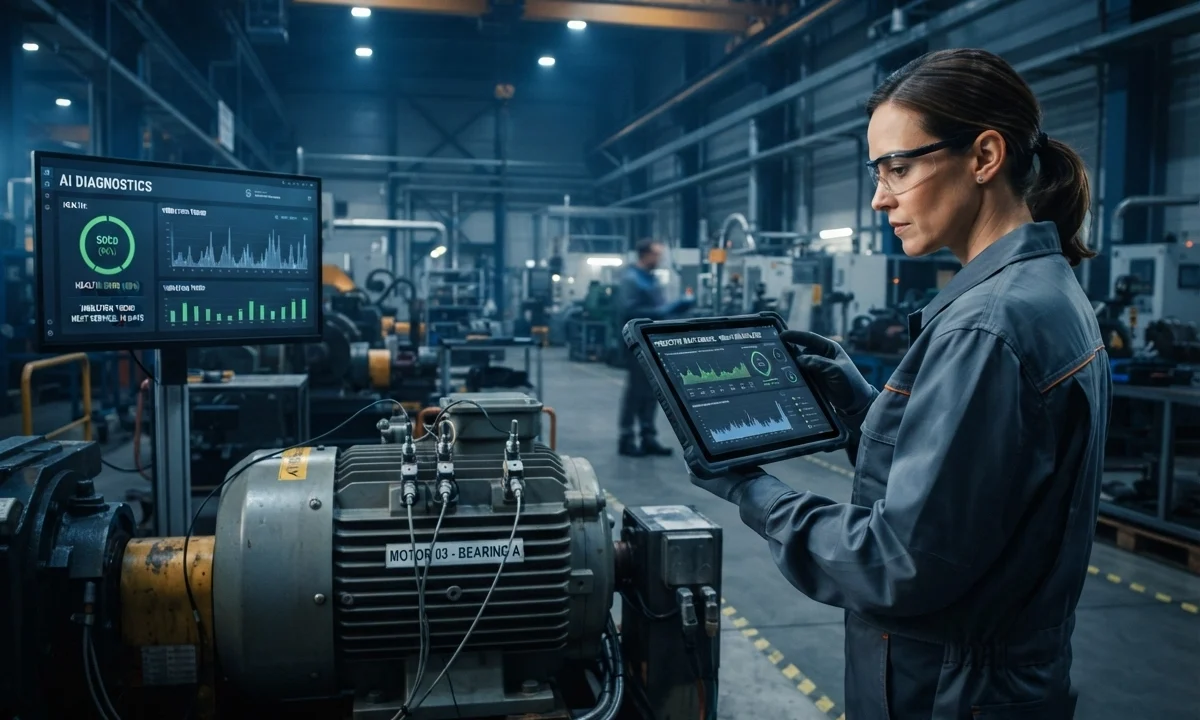
Early Fault Detection: How AI Vibration Analysis Prevents Equipment Failures Before They Happen
In industrial environments, equipment failures are often described as sudden events. However, most failures develop gradually through detectable warning signs. Early fault detection enables maintenance teams to identify developing equipment problems before they become costly failures. By using predictive maintenance, condition monitoring, and AI-powered vibration analysis, organizations can detect faults earlier, reduce unplanned downtime, and improve asset reliability.
However, the reality is very different.
Most equipment failures do not happen overnight. They develop gradually through a series of detectable warning signs that emerge long before functional failure occurs. Bearings begin to wear, shafts become misaligned, lubrication degrades, and mechanical components experience increasing stress. These changes generate signals that can be detected and analyzed before a breakdown takes place.
This is where early fault detection becomes essential.
By combining predictive maintenance, condition monitoring, and AI-powered vibration analysis, organizations can identify developing problems during their earliest stages, allowing maintenance teams to intervene before failures impact production.
In this article, we’ll explore why equipment failures are rarely sudden, how faults evolve over time, and how modern AI-driven vibration monitoring systems are transforming industrial maintenance strategies.
Why Equipment Failures Seem Sudden
One of the biggest misconceptions in industrial maintenance is the belief that machines fail without warning.
In reality, most failures are the result of progressive deterioration. The apparent “suddenness” of a breakdown usually reflects a failure to detect early warning signs rather than an unexpected equipment malfunction.
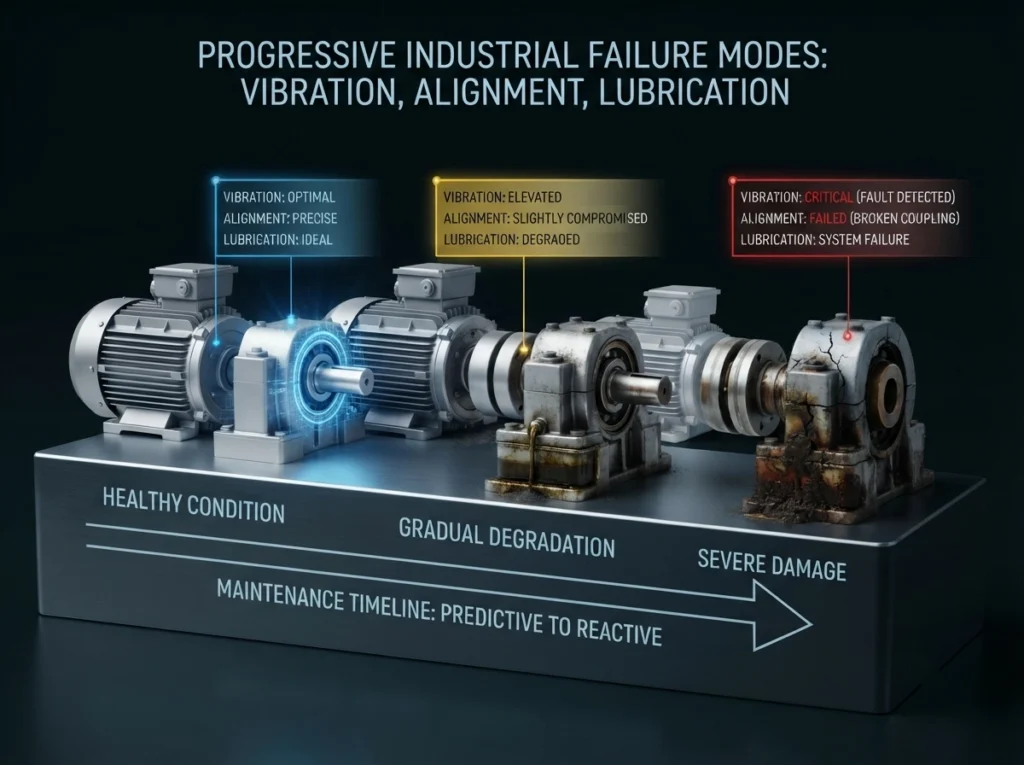
Common examples include:
- Bearing wear
- Shaft misalignment
- Mechanical looseness
- Lubrication degradation
- Gear wear
- Electrical insulation breakdown
- Rotor imbalance
Each of these issues typically develops over weeks or months.
The machine is communicating its condition through vibration patterns, acoustic signatures, temperature changes, and performance fluctuations. When these indicators go unnoticed, organizations remain unaware of the problem until the final stage of failure.
In other words:
Equipment failure is often not a sudden event. It is the culmination of a process that was not detected early enough.
This distinction fundamentally changes the maintenance mindset.
Instead of asking:
“How can we react faster to failures?”
Organizations should ask:
“How can we identify faults before they become failures?”
Understanding the P-F Curve
Reliability engineers often use the P-F Curve to explain how failures develop over time.
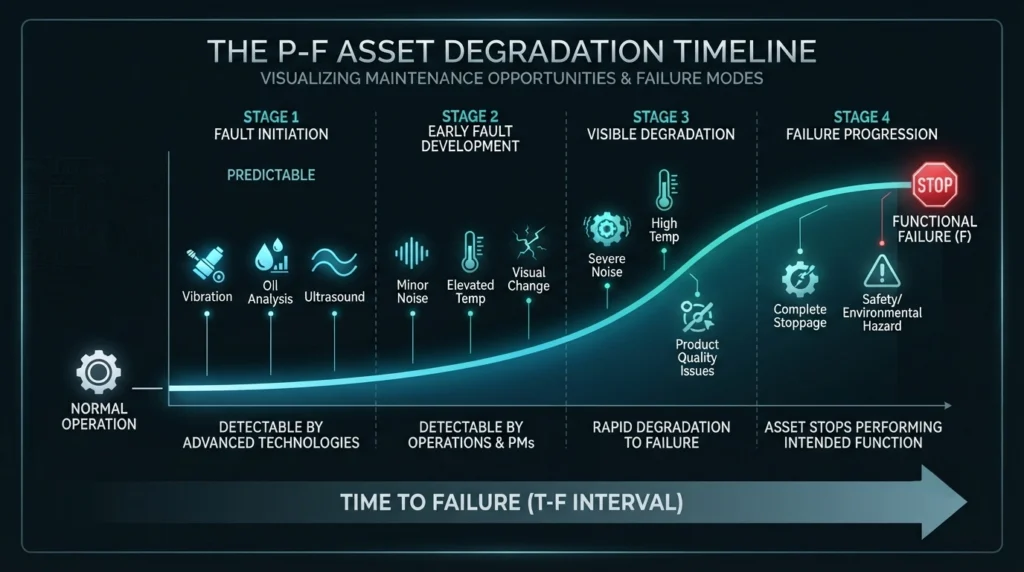
The P-F Curve represents the period between:
Potential Failure (P): The point at which a fault becomes detectable.
Functional Failure (F): The point at which the asset can no longer perform its intended function.
Between these two points, maintenance teams have a valuable opportunity to identify the developing issue, plan corrective actions, and prevent unexpected equipment failure.
Stage 1: Fault Initiation
Initially, a defect begins at a microscopic level and may not create any noticeable changes in equipment performance.
Examples include:
- Tiny bearing surface damage
- Minor shaft misalignment
- Early lubrication contamination
- Small gear tooth imperfections
At this early stage, traditional inspection methods often fail to detect the problem because the physical changes are still too small to observe.
Therefore, advanced condition monitoring techniques become essential for identifying faults before they progress further.
Stage 2: Early Fault Development
The defect begins to grow.
Changes become detectable through advanced monitoring technologies such as:
- Vibration analysis
- Ultrasound monitoring
- Oil analysis
- Thermal imaging
The machine is still functioning normally, but warning signs are present.
This stage represents the ideal opportunity for early fault detection.
Stage 3: Visible Degradation
The fault becomes increasingly apparent.
Organizations may begin noticing:
- Increased noise
- Elevated temperatures
- Reduced efficiency
- Abnormal machine behavior
Although intervention remains possible, repair costs are often significantly higher than during earlier stages.
Stage 4: Functional Failure
The asset can no longer perform its intended function.
Consequences may include:
- Production downtime
- Emergency maintenance
- Secondary equipment damage
- Safety risks
- Lost revenue
This is the stage most organizations refer to as “failure,” even though the problem has existed for a considerable period.
Failure Development at a Glance
| Stage | Description | Visibility | Maintenance Opportunity |
| Initiation | Defect begins | Invisible | Excellent |
| Early Development | Small measurable changes emerge | Detectable through monitoring | Very High |
| Visible Degradation | Noise, heat, and performance decline | Observable | Moderate |
| Functional Failure | Equipment can no longer operate | Obvious | Emergency Response |
The earlier a fault is detected along this curve, the greater the opportunity to reduce costs and avoid unplanned downtime.
Why Early Fault Detection Matters
Many organizations still rely heavily on reactive maintenance practices.
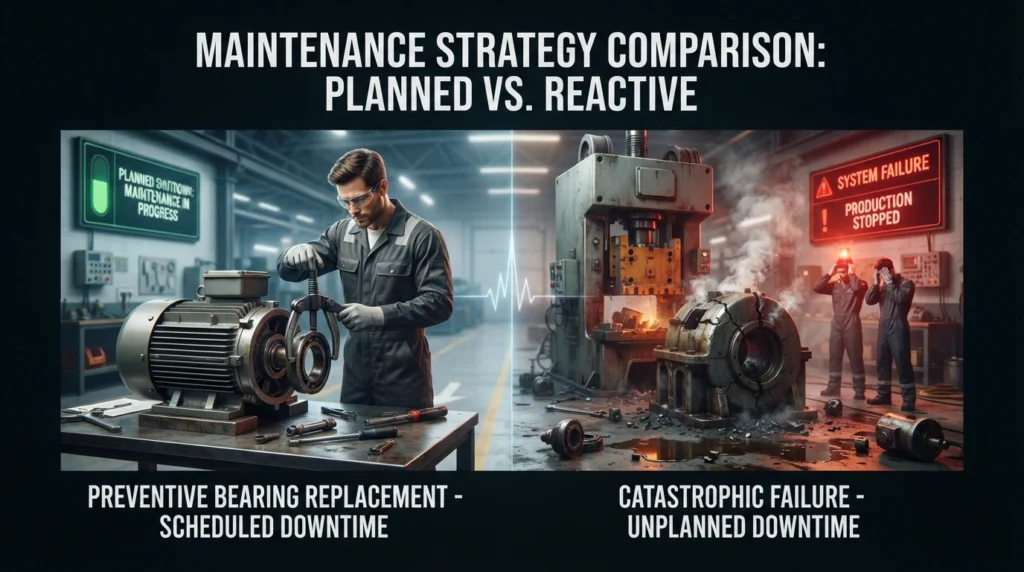
Unfortunately, reactive maintenance is often the most expensive maintenance strategy.
The benefits of early fault detection extend far beyond preventing equipment failures.
Reduced Maintenance Costs
Minor issues are generally inexpensive to repair.
For example:
- A planned bearing replacement may cost hundreds of dollars.
- A catastrophic bearing failure could result in thousands of dollars in repairs, labor, and downtime.
Early detection allows organizations to address faults before they escalate.
Reduced Unplanned Downtime
Unexpected downtime disrupts production schedules and impacts customer commitments.
When maintenance teams identify developing faults early, repairs can be scheduled during planned maintenance windows.
This significantly reduces operational disruption.
Extended Equipment Life
Faults that remain unresolved often cause secondary damage. Over time, small issues can develop into larger problems that affect multiple components across an asset.
For example, a misaligned shaft may damage:
- Bearings
- Couplings
- Seals
- Motors
By identifying and correcting the root cause early, organizations can preserve asset health, reduce unnecessary wear, and extend equipment lifespan.
Improved Safety
In addition to improving reliability, early fault detection also plays an important role in improving workplace safety.
Equipment failures can create serious safety hazards, including:
- Rotating component failures
- Overheating machinery
- Electrical faults
- Process interruptions
Therefore, early intervention helps reduce operational risks and supports safer working environments.
Better Resource Planning
Furthermore, predictive maintenance enables maintenance teams to plan resources more effectively.
Teams can:
- Schedule labor efficiently
- Order spare parts in advance
- Coordinate planned shutdowns
- Minimize emergency maintenance activities
As a result, organizations can improve maintenance efficiency, reduce unexpected disruptions, and optimize overall asset management processes.
Early Fault Detection vs Preventive Maintenance: Understanding the Difference
Many organizations confuse predictive maintenance with preventive maintenance.
While both approaches aim to reduce failures, they operate differently.
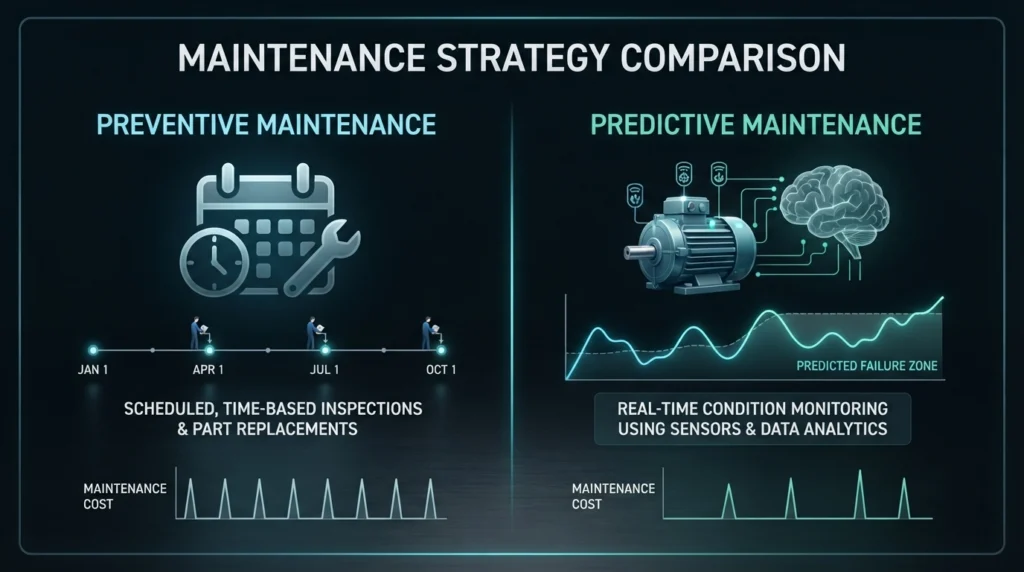
| Preventive Maintenance | Predictive Maintenance |
| Time-based | Condition-based |
| Fixed schedules | Real-time monitoring |
| May replace healthy components | Replaces components only when needed |
| Higher maintenance costs | Lower lifecycle costs |
| Limited equipment insight | Continuous asset visibility |
| Reactive to schedules | Proactive to asset condition |
Predictive maintenance leverages condition monitoring technologies to determine when maintenance is actually required.
This leads to more efficient use of resources and improved equipment reliability.
Early Fault Detection Technologies for Industrial Equipment
Modern maintenance programs use several monitoring technologies to identify developing faults.
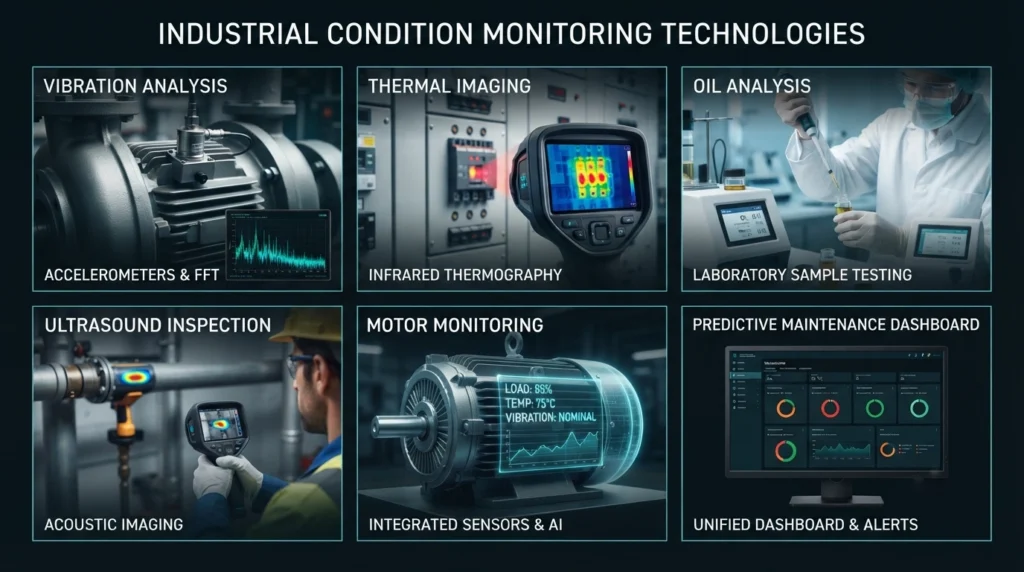
Vibration Analysis
Vibration analysis remains the most effective tool for monitoring rotating equipment.
It can detect:
- Bearing defects
- Imbalance
- Misalignment
- Mechanical looseness
- Gear faults
Long before failures become visible.
Thermal Imaging
Infrared cameras identify abnormal heat patterns associated with:
- Electrical faults
- Friction
- Overloading
- Insulation issues
Oil Analysis
Lubricant samples provide insight into:
- Wear particles
- Contamination
- Lubricant degradation
Oil analysis is particularly valuable for gearboxes and hydraulic systems.
UUltrasound Monitoring
Ultrasound technology provides another effective method for detecting early equipment problems. By analyzing high-frequency sound patterns, it can identify issues that may not be visible through traditional inspection methods.
Ultrasound monitoring can detect:
- Air leaks
- Steam leaks
- Electrical arcing
- Early bearing defects
Motor Current Analysis
Similarly, motor current monitoring provides valuable insights into both electrical and mechanical conditions.
It helps identify:
- Rotor problems
- Electrical imbalance
- Mechanical loading issues
By combining these monitoring methods with vibration analysis and other condition monitoring techniques, organizations can develop a more complete understanding of asset health. As a result, these technologies work together to create a comprehensive machine health monitoring strategy.
Why Vibration Analysis Is the Gold Standard
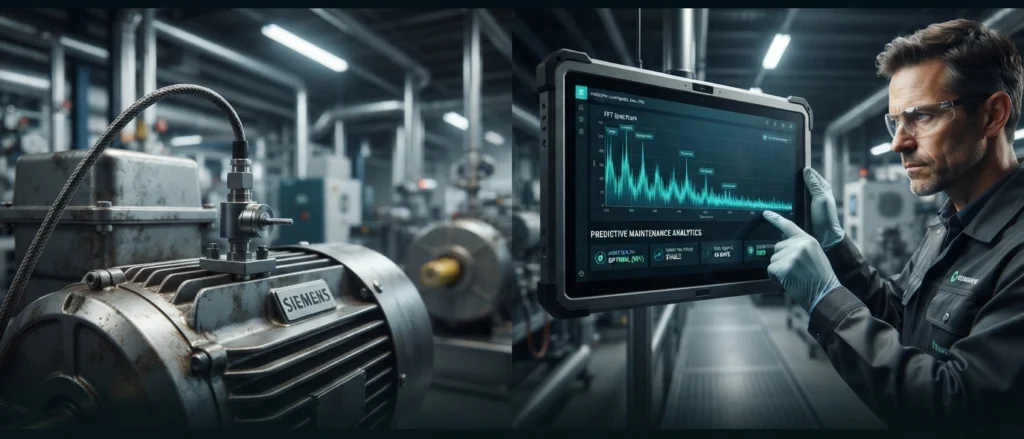
Among all condition monitoring technologies, vibration analysis is often considered the most powerful for rotating equipment monitoring.
Why?
Because vibration changes occur very early in the failure process.
Machines naturally produce vibration during operation.
When faults begin developing, vibration patterns change in predictable ways.
These changes often appear weeks or months before:
- Temperature increases
- Audible noise develops
- Performance degradation becomes noticeable
Sensitivity
Vibration analysis detects extremely small changes in machine behavior.
This enables maintenance teams to identify issues during the earliest stages of fault development.
Specificity
Different failure modes create unique vibration signatures.
For example:
| Fault Type | Typical Vibration Pattern |
| Imbalance | High 1X running speed vibration |
| Misalignment | Elevated harmonics |
| Bearing Defect | High-frequency vibration |
| Looseness | Broadband vibration |
| Gear Fault | Gear mesh frequencies |
This specificity supports accurate diagnosis.
Continuous Visibility
Unlike periodic inspections, continuous vibration monitoring provides constant visibility into equipment condition.
Organizations can monitor fault progression over time and prioritize maintenance activities based on risk.
TThe Real Challenge: Data Interpretation
Many industrial facilities already collect enormous amounts of machine data. However, collecting data alone does not guarantee better maintenance decisions.
The problem is not data collection.
Instead, the real challenge is interpreting this information effectively.
A facility may monitor:
- Hundreds of assets
- Thousands of sensors
- Millions of data points
As a result, reviewing this information manually can become difficult, expensive, and often impractical.
Furthermore, even experienced vibration analysts have limited capacity when managing large volumes of machine data.
As machine fleets continue to grow, the gap between data collection and data interpretation becomes increasingly difficult to manage. Therefore, organizations need advanced analytics solutions that can transform raw machine data into actionable maintenance insights.
How AI Improves Predictive Maintenance
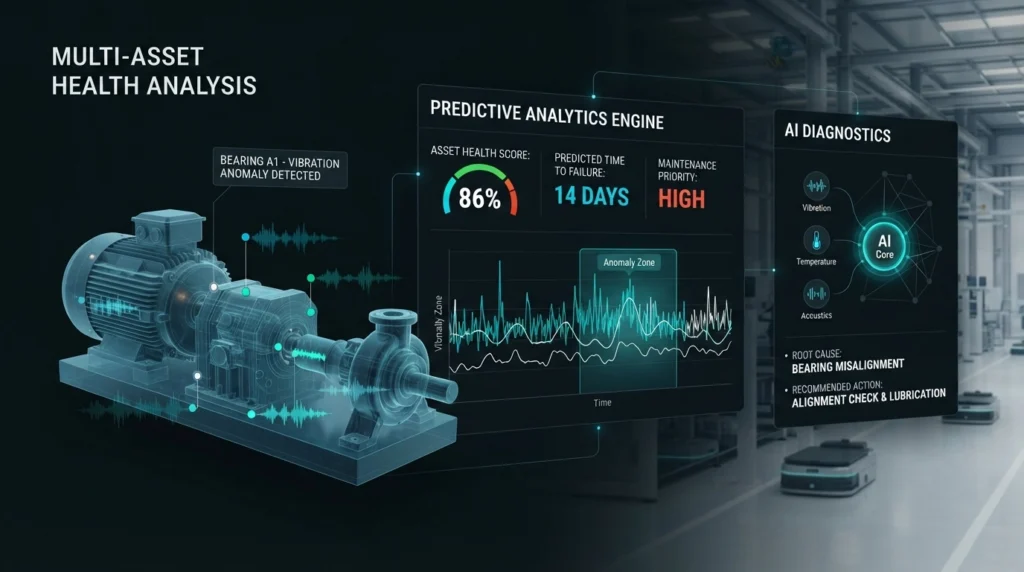
Artificial intelligence is changing the way organizations interpret vibration data.
Rather than relying solely on manual analysis, AI systems continuously evaluate machine health and identify developing faults.
AAI Pattern Recognition for Early Fault Detection
Machine learning algorithms recognize vibration patterns associated with specific failure modes. By analyzing these patterns continuously, AI systems can identify subtle changes in equipment behavior that may indicate developing faults.
For example, these systems can detect patterns related to:
- Bearing defects
- Shaft misalignment
- Rotor imbalance
- Mechanical looseness
- Gear damage
Furthermore, AI-based pattern recognition allows maintenance teams to detect abnormal conditions earlier and with greater consistency. As a result, the system can identify fault patterns that may be difficult for human analysts to detect reliably, especially when monitoring large numbers of industrial assets.
Continuous Monitoring for Early Fault Detection
AI never stops monitoring.
Instead of reviewing reports periodically, organizations receive ongoing insight into asset condition.
This improves responsiveness and increases fault detection coverage.
AI-Based Fault Diagnosis and Early Detection
Modern AI systems go beyond anomaly detection. Instead of only identifying unusual patterns, they can provide deeper insights into machine condition.
They can:
- Identify likely fault types
- Estimate severity
- Track fault progression over time
- Recommend appropriate maintenance actions
As a result, maintenance teams can move from simple data collection to actionable intelligence and make faster, more informed decisions.
Risk Prioritization
However, not every anomaly requires immediate action.
Therefore, advanced AI systems classify detected issues based on:
- Severity
- Probability of failure
- Business impact
By prioritizing risks effectively, these systems reduce alarm fatigue and help maintenance teams focus on the most critical problems first.
Early Fault Detection Case Study: Bearing Failure
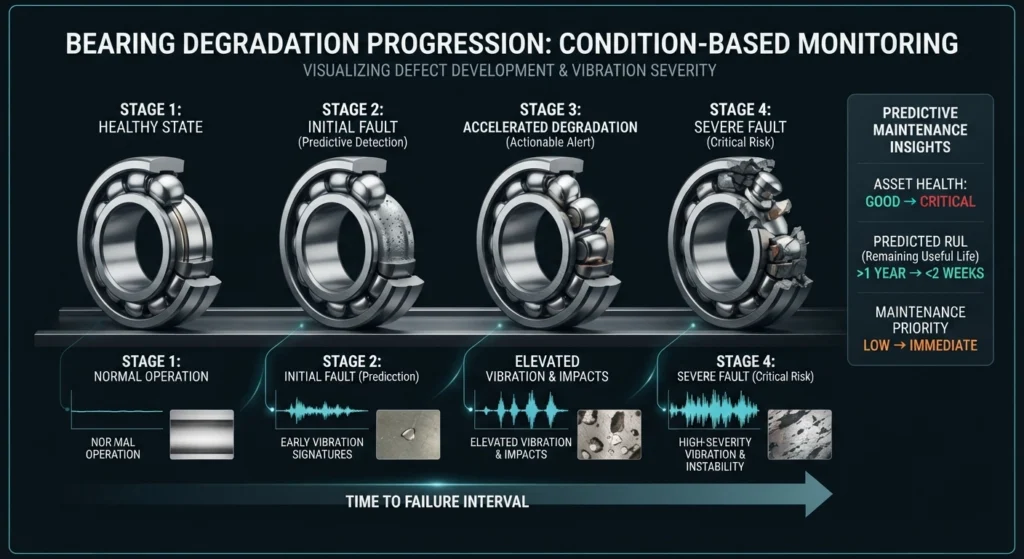
Bearing failures illustrate the value of early fault detection effectively. In practice, AI-powered monitoring can identify developing bearing issues long before they result in equipment failure.
During the early stages, minor surface damage begins.
At this point, there are usually no visible symptoms.
Over the following weeks, high-frequency vibration signatures emerge.
Consequently, AI vibration interpretation identifies abnormal behavior and provides early warnings.
As the defect progresses, severity increases.
Therefore, maintenance teams receive alerts and can begin repair planning before a critical failure occurs.
Without intervention, the condition continues to deteriorate:
- Noise increases
- Temperature rises
- Damage accelerates
Ultimately, the bearing may fail and cause unexpected downtime.
Eventually, the bearing fails.
Organizations using predictive maintenance can intervene weeks earlier and avoid emergency downtime.
Early Fault Detection Case Study: Shaft Misalignment
Misalignment is one of the most common industrial faults.
Even small alignment errors create excessive loads across the machine train.
Consequences include:
- Bearing wear
- Seal failure
- Coupling damage
- Increased energy consumption
Vibration analysis detects misalignment through characteristic harmonic patterns long before visible damage appears.
AI systems can automatically classify these signatures and prioritize corrective action.
Building an Effective Early Fault Detection Strategy
Organizations seeking to improve asset reliability should focus on several key principles. By following a structured approach, maintenance teams can improve fault detection capabilities, reduce risks, and make more informed decisions.
Identify Critical Assets for Early Fault Detection
First, organizations should identify the assets that require the highest level of monitoring.
Not every machine requires continuous monitoring. Instead, priority should be given to equipment with:
- High downtime costs
- Significant safety implications
- Major production impact
By focusing on critical assets first, organizations can maximize the value of their monitoring investments.
Deploy Condition Monitoring Systems
Once critical assets are identified, organizations should install monitoring technologies that match each asset’s requirements.
Priority technologies include:
- Vibration monitoring
- Thermal imaging
- Oil analysis
Together, these technologies provide valuable insights into equipment condition and help detect developing faults earlier.
Leverage AI-Powered Analytics
Furthermore, AI helps organizations scale diagnostic capabilities across large asset populations.
By continuously analyzing machine data, AI systems can identify abnormal patterns and prioritize potential issues. As a result, critical warning signs are less likely to go unnoticed.
Establish Response Procedures
However, detection alone is not enough. Organizations must also establish clear processes to ensure that identified issues lead to action.
Effective response procedures should define:
- Alert thresholds
- Escalation procedures
- Maintenance workflows
Ultimately, a successful early fault detection strategy depends not only on identifying problems but also on responding to them at the right time.
Frequently Asked Questions
Early fault detection is the process of identifying equipment problems during their initial stages before they develop into functional failures.
Vibration analysis provides one of the earliest and most reliable indicators of developing mechanical faults.
No. AI enhances human expertise by automating analysis and identifying patterns at scale, but experienced professionals remain essential for decision-making.
It can identify bearing defects, imbalance, misalignment, mechanical looseness, gear faults, and many other rotating equipment issues.
Organizations implementing mature predictive maintenance programs often experience substantial reductions in unplanned downtime and maintenance costs.
Industries with critical rotating equipment benefit significantly, including:
Manufacturing
Oil and Gas
Mining
Chemical Processing
Utilities
Food and Beverage Production
For critical assets, continuous monitoring often provides the greatest value because it captures the entire fault development process.
AI improves equipment reliability by continuously analyzing machine data, identifying fault patterns, prioritizing risks, and supporting proactive maintenance decisions.
Conclusion
Equipment failures rarely happen overnight.
What often appears to be a sudden breakdown is usually the final stage of a fault that has been developing for weeks or even months.
By embracing early fault detection, organizations can identify problems before they become failures, reduce maintenance costs, improve safety, and increase equipment reliability.
The combination of predictive maintenance, condition monitoring, machine health monitoring, and AI-powered vibration analysis provides unprecedented visibility into asset condition.
The future of maintenance is not about collecting more data.
It is about understanding equipment behavior earlier, diagnosing faults faster, and acting before downtime occurs.
Because equipment failures rarely happen overnight.
Missed warnings do.