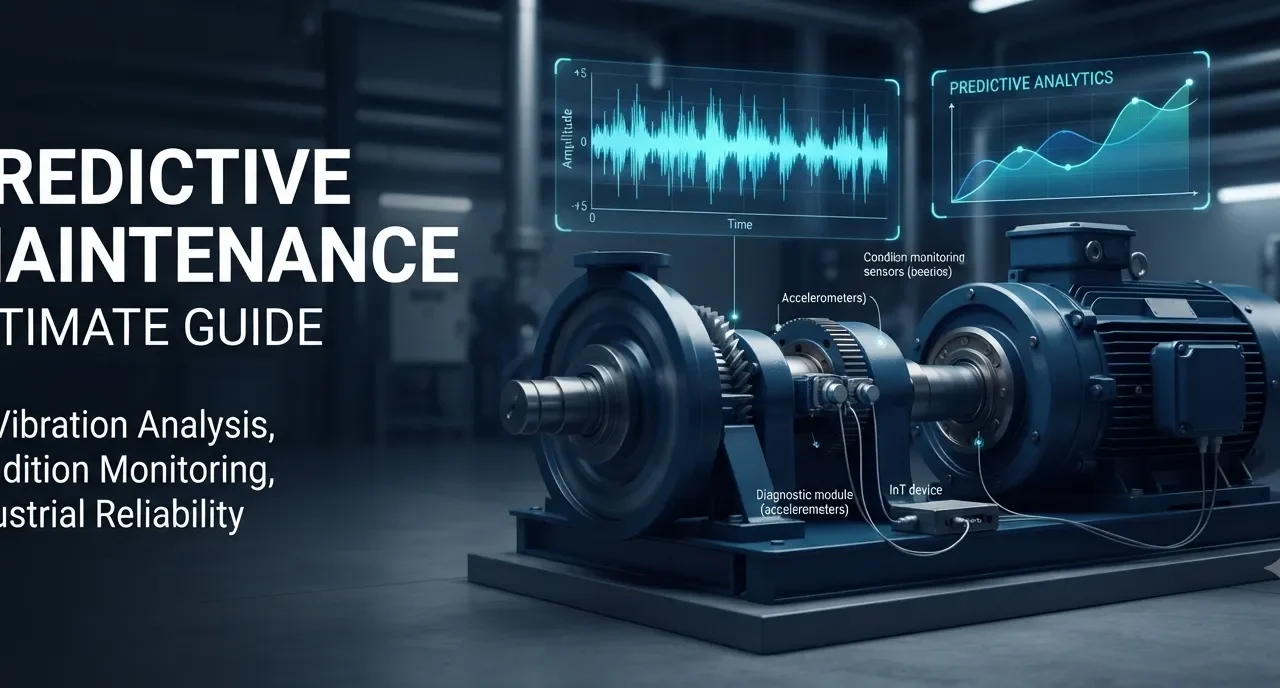
Predictive Maintenance Ultimate Guide: How AI, Vibration Analysis, and Condition Monitoring Are Transforming Industrial Reliability
What Is Predictive Maintenance?
In today’s industrial environment, equipment reliability has become a competitive advantage. Manufacturers, utilities, mining companies, oil and gas operators, and processing plants all face the same challenge:
How can equipment failures be prevented before they disrupt production?
For decades, organizations relied on reactive maintenance or scheduled preventive maintenance. While these approaches can be effective in certain situations, they often lead to unnecessary maintenance costs, unplanned downtime, or unexpected equipment failures.
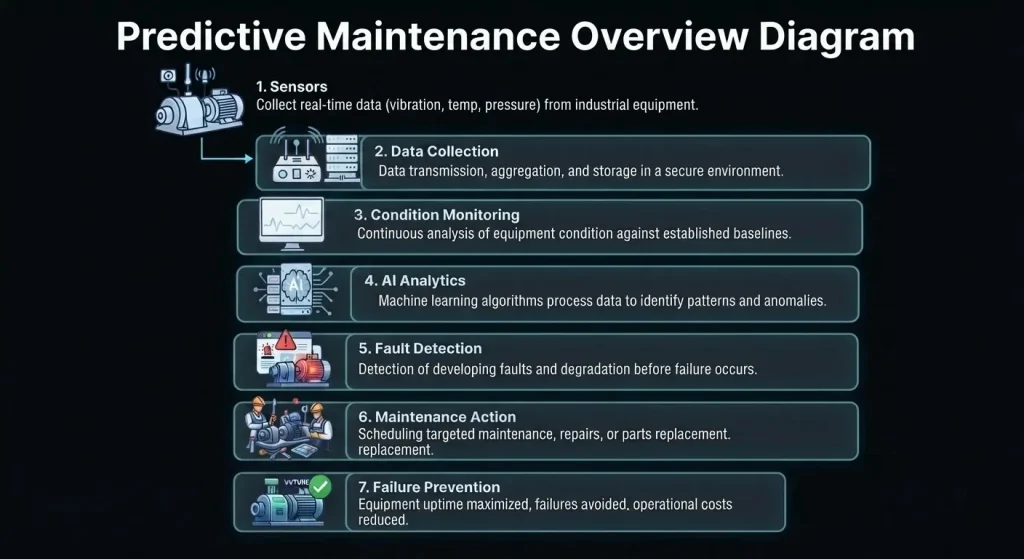
This is where Predictive Maintenance (PdM) changes the equation. Predictive Maintenance uses real-time machine condition data, advanced analytics, artificial intelligence, and condition monitoring technologies to identify developing faults before they become failures.
Instead of asking “when should we replace this component?”, Predictive Maintenance asks “what is the actual condition of this component right now?” This shift enables organizations to make maintenance decisions based on evidence rather than assumptions — and it’s the foundation that platforms like Synapse Edge are built to support.
In This Guide
In this guide, we’ll cover:
- What Predictive Maintenance is and why it matters
- How maintenance strategies have evolved over time
- The role of the P-F Curve in failure prevention
- The core technologies behind condition monitoring
- How AI transforms machine data into maintenance decisions
- Common machine faults predictive maintenance can detect
- The business and operational benefits of PdM
- Industry-specific applications across heavy industry
- Emerging trends shaping the future of industrial reliability
Why Traditional Maintenance Strategies Are No Longer Enough
To understand the value of predictive maintenance, it helps to examine the evolution of maintenance strategies.
Reactive Maintenance
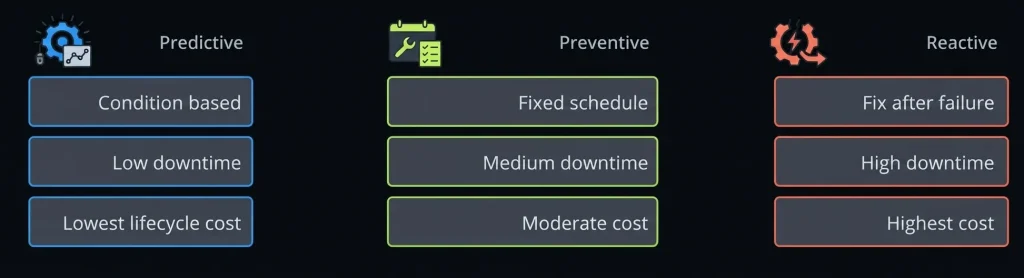
Reactive maintenance follows a simple philosophy: run equipment until it fails. It requires minimal planning and low initial investment, but it typically leads to unexpected downtime, emergency repairs, higher maintenance costs, safety risks, and secondary equipment damage. Although still common in many facilities, reactive maintenance is generally the most expensive maintenance strategy.
Preventive Maintenance
Preventive maintenance introduced scheduled servicing based on time or usage intervals — replacing bearings every 12 months, lubricating equipment every 500 operating hours, or conducting quarterly inspections. This reduces catastrophic failures and improves planning, but it often leads to over-maintenance, unnecessary component replacement, and limited visibility into actual equipment condition. A bearing may still have years of useful life remaining, yet a preventive schedule may require replacement anyway.
Predictive Maintenance
Predictive maintenance monitors actual equipment health, and maintenance occurs when condition data indicates intervention is necessary. This approach reduces downtime and maintenance costs, improves asset reliability, extends equipment life, and improves resource utilization — allowing organizations to intervene at the optimal moment rather than on a fixed calendar.
The Evolution of Maintenance Maturity
Maintenance programs typically evolve through several stages of maturity:
| Stage | Approach | Primary Goal |
| Reactive | Fix equipment after failure | Restore operation |
| Preventive | Perform maintenance on a schedule | Reduce failures |
| Condition-Based | Monitor equipment health | Detect deterioration |
| Predictive | Forecast failures before they occur | Optimize interventions |
| Prescriptive | Recommend optimal maintenance actions | Maximize reliability and efficiency |
Most industrial organizations today operate somewhere between preventive and predictive maintenance. The goal is not simply to collect more data — it is to make better maintenance decisions based on actual equipment condition.
How Predictive Maintenance Works
Predictive maintenance is built around a simple principle: equipment provides warning signs before failure occurs. These warning signs appear through measurable changes in machine behavior — increased vibration, rising temperatures, lubricant contamination, electrical abnormalities, and performance degradation.
Sensors collect this information continuously, analytics platforms evaluate the data, and maintenance teams act before failures occur.
The P-F Curve: The Foundation of Predictive Maintenance
One of the most important concepts in reliability engineering is the P-F Curve — the interval between Potential Failure (P) and Functional Failure (F), during which faults can be detected and corrected before production is affected. That interval typically unfolds in four stages: fault initiation (no visible symptoms), a detectable condition change (where vibration and other monitoring technologies create the most value), visible degradation (where intervention is still possible but increasingly costly), and finally functional failure, when the asset can no longer perform its intended function.
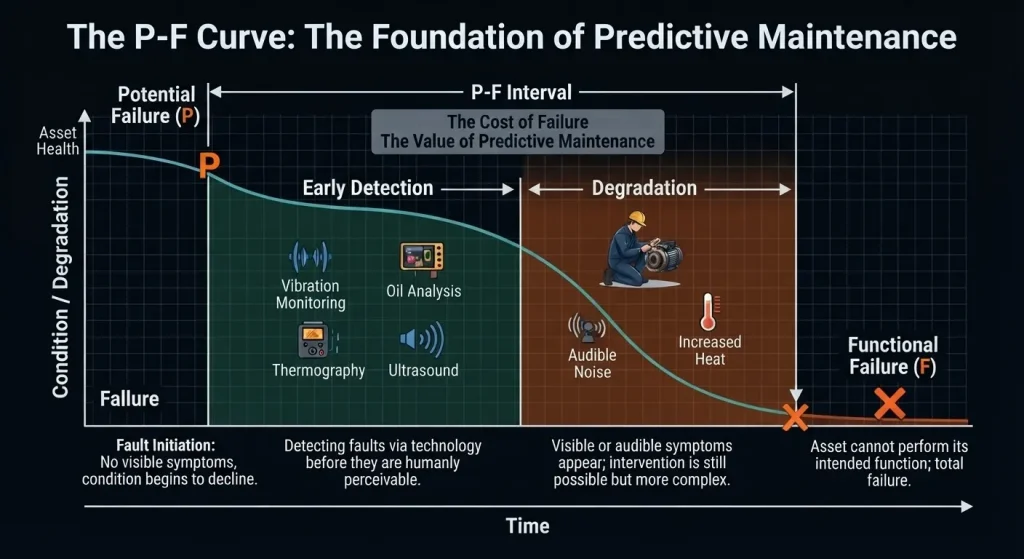
Furthermore, we explore this failure progression curve in greater detail by examining real fault examples, industrial case studies, and the impact of delayed detection on maintenance costs. Ultimately, understanding how minor abnormalities develop into major failures is essential for building an effective predictive maintenance strategy and improving long-term asset reliability.
Core Technologies Used in Predictive Maintenance
Successful predictive maintenance programs rely on multiple condition monitoring technologies.
Vibration Analysis
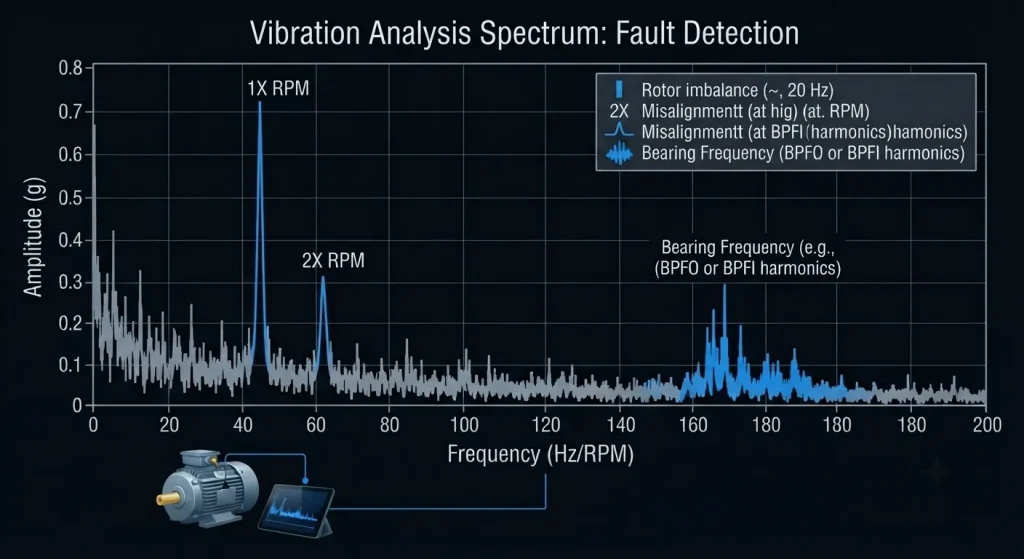
Vibration analysis is widely considered the most effective technology for rotating equipment monitoring. It can identify bearing defects, misalignment, rotor imbalance, mechanical looseness, and gear faults weeks or even months before failure occurs, since vibration signatures change as faults develop — often before heat increases, audible noise develops, or performance visibly declines. This makes it one of the earliest indicators of machine health.
Thermography
Thermography uses infrared technology to detect abnormal heat patterns that may indicate developing equipment issues. Common causes include electrical faults, excessive friction, overloading, poor connections, poor lubrication, and insulation degradation.
Furthermore, thermal monitoring complements vibration analysis by providing an additional layer of diagnostic insight. As a result, maintenance teams can identify potential problems earlier and gain a more complete understanding of overall asset condition.
Oil Analysis
Lubricants contain valuable information about machine condition. Oil analysis can identify wear particles, contamination, lubricant degradation, and internal component wear, and is particularly valuable for gearboxes and hydraulic systems.
Ultrasound Monitoring
Ultrasound systems detect high-frequency sounds beyond human hearing, with applications in bearing monitoring, leak detection, and electrical inspection — often identifying problems before they become audible.
Motor Current Analysis
Electrical signatures provide insight into motor health, rotor defects, load abnormalities, and electrical imbalance, and are increasingly used alongside other predictive maintenance technologies.
The Role of AI in Predictive Maintenance
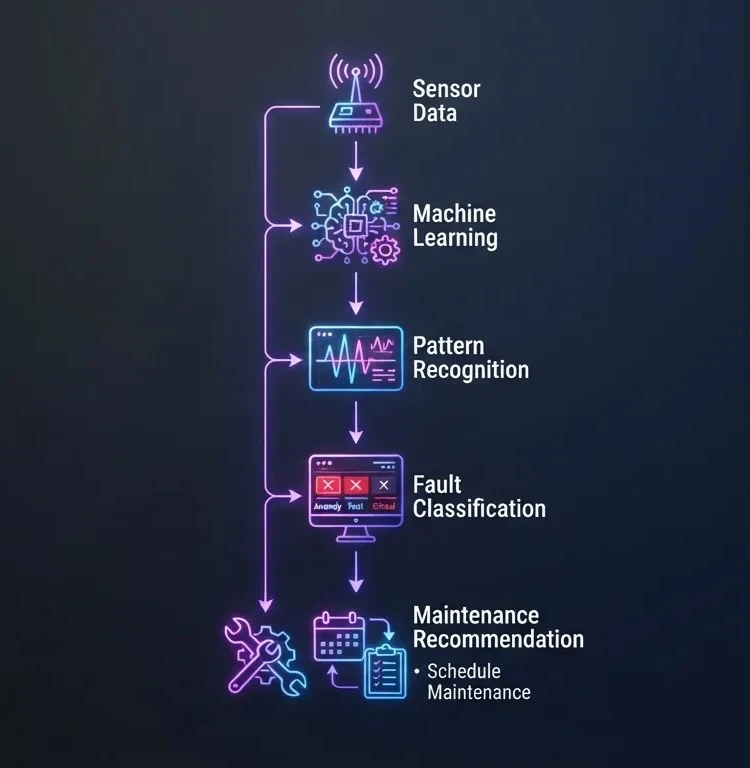
Modern facilities generate enormous amounts of machine data — a large operation may collect millions of vibration readings, thousands of sensor measurements, and continuous operating data. Reviewing this information manually is difficult, which is exactly where AI transforms predictive maintenance.
Rather than simply detecting anomalies, AI evaluates frequency content, historical trends, failure signatures, operating conditions, and asset behavior, comparing current machine behavior against known fault patterns. Instead of reporting “vibration increased,” AI reports “this pattern resembles an early-stage bearing defect” — actionable intelligence rather than raw data.
Moreover, organizations adopting industrial AI often achieve faster fault detection, improved diagnostic consistency, better maintenance prioritization, reduced alarm fatigue, and greater scalability. As a result, reliability teams can focus their efforts on the issues that genuinely require attention while making more informed maintenance decisions.
Synapse Edge Reliability Intelligence
Synapse Edge has been trained on more than 1 million real industrial vibration data points and can identify 17+ common machine fault types across industries including steel, cement, mining, oil & gas, and food & beverage.
The goal isn’t simply to detect abnormal behavior — it’s to help maintenance teams understand what the data means and determine what action should be taken next.
By combining vibration analysis with AI-driven interpretation, Synapse Edge helps transform complex machine data into actionable reliability insights, enabling faster diagnosis and more informed maintenance decisions.
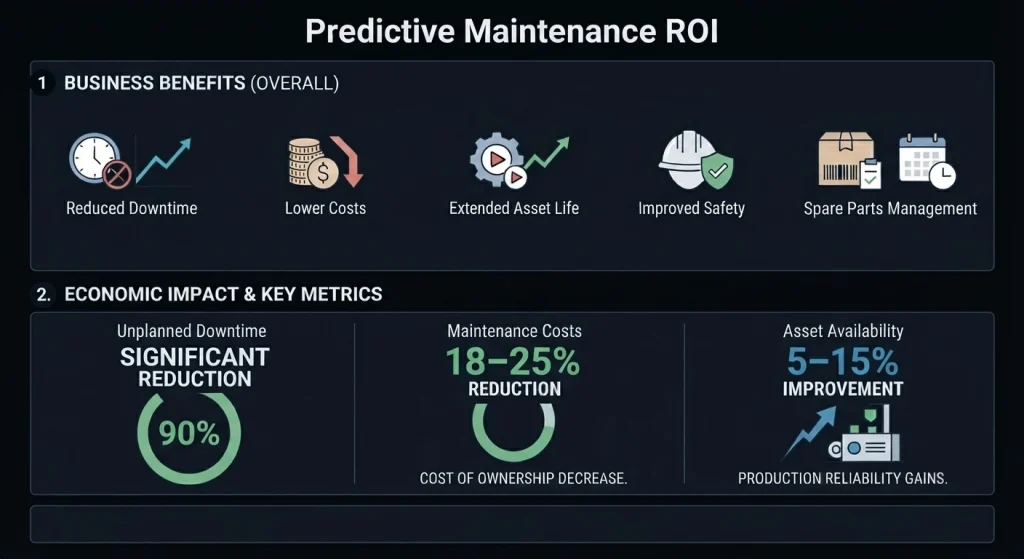
According to McKinsey’s research on digital reliability programs in heavy industry, companies that successfully deploy predictive maintenance and digital reliability tools have seen asset availability improve by 5 to 15 percent and maintenance costs fall by 18 to 25 percent — gains McKinsey attributes to the shift from fixed schedules and guesswork toward decisions based on actual condition data. (McKinsey & Company)
Common Faults Predictive Maintenance Can Detect
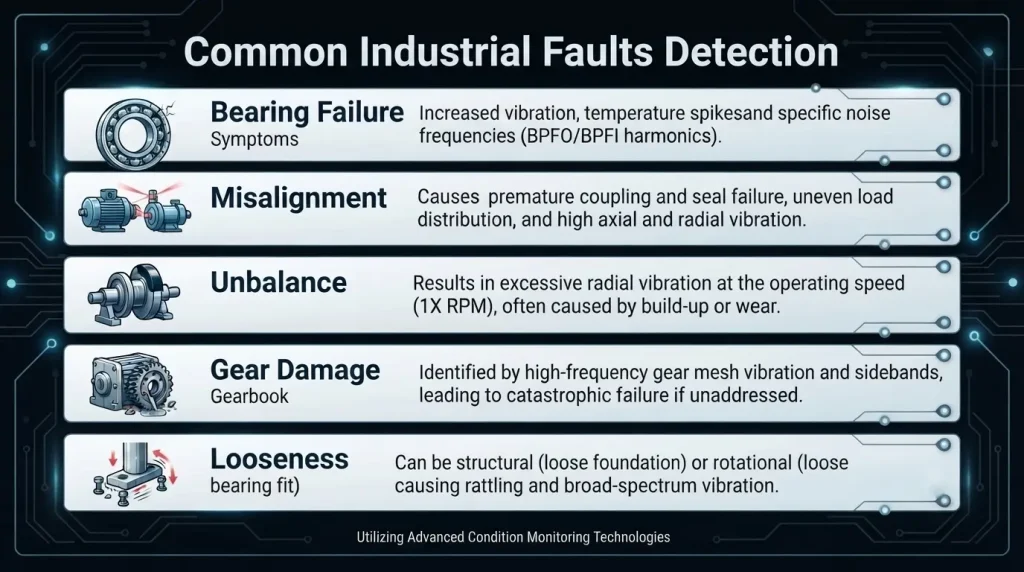
Note: The following list highlights only some of the most common mechanical and electrical faults detectable through condition monitoring. The field of Predictive Maintenance (PdM) is vast, encompassing a wide range of advanced analytics, diverse sensor data, and specialized diagnostic techniques, of which these examples represent only a small portion.
Bearing Defects
Bearing failures represent one of the most common equipment problems. Predictive maintenance identifies inner race defects, outer race defects, rolling element damage, and cage defects long before failure occurs.
Shaft Misalignment and Rotor Imbalance
Misalignment introduces excessive mechanical stress — elevated vibration, coupling wear, seal damage, and increased energy consumption — while imbalance creates centrifugal forces that increase machine vibration and accelerate wear. The two are among the most commonly confused faults in vibration diagnostics, since they can look similar on a trend chart despite having entirely different root causes and corrective actions.
Consequently, understanding the differences between these two fault conditions becomes essential for accurate vibration diagnosis, effective troubleshooting, and selecting the right corrective maintenance strategy.
Mechanical Looseness
Loose components create unstable vibration patterns that can accelerate equipment degradation.
Gearbox Failures
Predictive monitoring identifies gear wear, tooth damage, and lubrication problems before catastrophic failures occur.
Business Benefits of Predictive Maintenance
Organizations invest in predictive maintenance because the benefits extend beyond maintenance departments:
- Reduced downtime — early fault detection prevents unexpected shutdowns, improving production reliability and customer service.
- Lower maintenance costs — condition-based interventions reduce unnecessary maintenance activities and allocate resources more effectively.
- Extended asset life — correcting faults early reduces secondary damage and preserves equipment health.
- Improved safety — preventing equipment failures reduces operational risks.
- Better spare parts management — maintenance teams gain more time to order parts and schedule repairs, reducing emergency procurement costs.
The Economics of Predictive Maintenance
The cost of equipment failure extends far beyond the price of a replacement component.
In fact, a bearing that costs a few hundred dollars may trigger production losses, emergency labor costs, secondary equipment damage, overtime expenses, and delayed customer deliveries. As a result, in many industrial environments, the financial impact of downtime can exceed the cost of the failed component by several orders of magnitude.
According to McKinsey’s research on digital reliability programs, organizations implementing predictive maintenance have reported 5–15% improvement in asset availability, 18–25% reduction in maintenance costs, and significant reductions in unplanned downtime.
The business case for predictive maintenance is rarely about reducing maintenance activity. It is about protecting production capacity and improving operational reliability.
Predictive Maintenance vs Preventive Maintenance
| Preventive Maintenance | Predictive Maintenance |
| Time-based | Condition-based |
| Fixed schedules | Real-time monitoring |
| May replace healthy components | Maintenance only when needed |
| Limited machine insight | Continuous asset visibility |
| Higher long-term costs | Lower lifecycle costs |
Compared with preventive maintenance, predictive maintenance provides significantly greater visibility into actual asset condition.
How Different Industries Use Predictive Maintenance
While the principles of predictive maintenance remain consistent, the operational challenges vary by industry.
Steel
Steel plants depend heavily on rotating equipment such as motors, pumps, fans, gearboxes, and rolling mill systems. Unexpected failures can disrupt continuous production processes and create significant operational losses.
Cement
Cement facilities operate in harsh environments characterized by dust, vibration, and heavy mechanical loads. As a result, early fault detection helps prevent costly shutdowns and equipment damage.
Mining
Mining operations often manage equipment across large geographic areas where maintenance access can be limited. Consequently, predictive maintenance improves planning and reduces unexpected failures in critical assets.
Oil & Gas
Reliability failures in oil and gas operations can affect production, safety, and environmental performance. Therefore, continuous condition monitoring helps reduce operational risk and improve asset reliability.
Food & Beverage
Production schedules, quality standards, and regulatory requirements make equipment reliability critical. Predictive maintenance helps reduce downtime while maintaining operational efficiency.
Challenges of Predictive Maintenance
While highly effective, predictive maintenance requires proper implementation. Common challenges include data quality (poor sensor data produces poor results), sensor placement (improper installation reduces diagnostic accuracy), change management (organizations must adapt maintenance workflows and decision-making processes), and skill development (teams require training in reliability engineering, condition monitoring, and predictive analytics).
The Future of Predictive Maintenance
Several emerging technologies are shaping the future of industrial reliability. For example, Industrial IoT enables continuous monitoring through connected sensors, while Edge AI brings real-time diagnostics directly to monitoring hardware.
Furthermore, digital twins improve forecasting and maintenance planning through virtual asset models, while predictive analytics and autonomous reliability systems help organizations anticipate failures and make smarter maintenance decisions.
Frequently Asked Questions
Predictive maintenance is a maintenance strategy that uses condition monitoring and data analysis to identify equipment problems before failures occur.
Common technologies include vibration analysis, Thermography, oil analysis, ultrasound monitoring, motor current analysis, AI, and predictive analytics.
In many cases, yes. Predictive maintenance reduces unnecessary maintenance activities and improves asset visibility.
No. AI supports maintenance decisions but does not replace engineering expertise.
Manufacturing, mining, energy, utilities, oil and gas, chemical processing, food production, and transportation industries all benefit significantly.
Vibration analysis detects mechanical faults such as bearing defects, misalignment, imbalance, and looseness during early stages of development.
The P-F Curve represents the time between the first detectable indication of a fault and functional equipment failure.
Yes. Predictive maintenance existed before AI. However, AI significantly improves scalability, consistency, and fault interpretation across large asset fleets.
Vibration analysis can detect bearing defects, imbalance, misalignment, looseness, gear faults, resonance issues, and several other mechanical problems.
The amount depends on the asset and monitoring strategy, but successful predictive maintenance programs typically rely on continuous condition data collected over time to establish equipment baselines and identify deviations.
Conclusion
Predictive maintenance represents one of the most important advances in industrial reliability. By combining condition monitoring, vibration analysis, predictive analytics, and artificial intelligence, organizations can identify developing faults before they become failures — resulting in lower maintenance costs, reduced downtime, improved safety, and greater asset reliability.
The future of maintenance is no longer based on reacting to failures or following fixed schedules. It is based on understanding equipment condition in real time and making smarter maintenance decisions. Because the best equipment failure is the one that never happens.
See How Synapse Edge Puts This Into Practice
Explore how AI-powered vibration intelligence helps maintenance teams detect faults earlier, diagnose them accurately, and act before downtime occurs.
Continue Building Your Reliability Knowledge
Predictive maintenance is a continuously evolving field that combines machine condition monitoring, vibration analysis, artificial intelligence, and data-driven reliability strategies. Continue exploring the key concepts and technologies shaping the future of industrial reliability in the Synapse Edge Reliability Intelligence Series.