Digital Twin, IoT and AI: The Convergence Transforming Industrial Operations
Three technologies keep getting mentioned in the same breath — Digital Twin, IoT, and AI — but they’re rarely explained as one system. In practice, that’s exactly what they are: three layers of the same pipeline, each depending on the one before it.
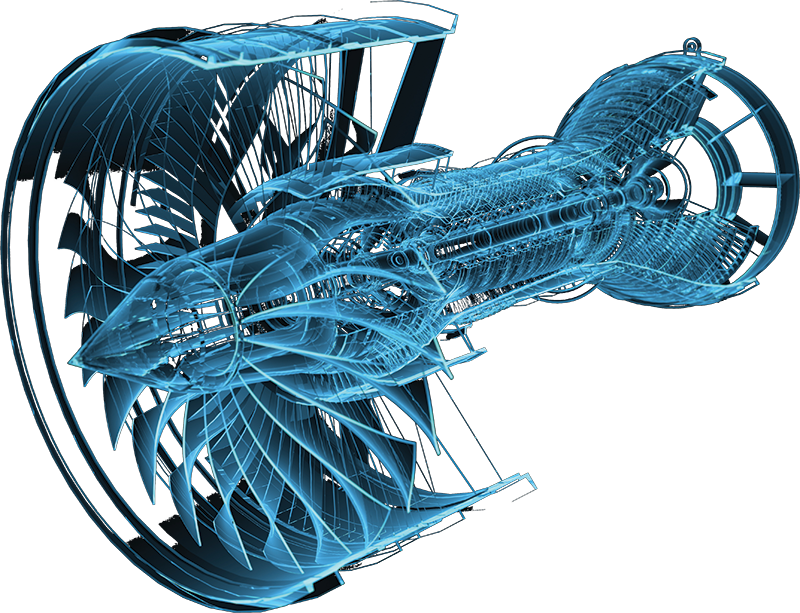
The animation above illustrates the concept using a jet engine — a fan, core, and turbine stages instrumented with live sensor readouts (thrust, fan speed, core speed, EGT, oil pressure, fuel flow, vibration). It’s a simplified picture of what a real industrial digital twin looks like underneath: not a static 3D model, but a structure that’s constantly being fed real numbers.
The Three Layers of a Modern Digital Twin
1. IoT — the sensory layer
Everything starts with physical sensors: temperature, pressure, vibration, flow, current draw. On an industrial asset, these readings are gathered at the edge and pushed upstream over LoRaWAN, MQTT, or a wired industrial protocol. This is the layer that makes a digital twin true rather than illustrative — without a live data feed, a 3D model is just a picture of a machine, not a mirror of it.
2. AI — the predictive layer
Raw sensor data tells you what’s happening right now. AI models trained on historical failure patterns tell you what’s about to happen — a bearing trending toward failure, a fan speed drifting outside its normal envelope, a vibration signature that matches a known fault pattern. This is where a digital twin stops being a dashboard and starts being a maintenance strategy: forecasting anomalies 24–72 hours before equipment failure, rather than reacting once an alarm has already fired.
3. Digital Twin — the visualisation and simulation layer
This is the layer people usually mean when they say “digital twin” — the 3D replica that sensor data flows into. Done properly, it’s not just a pretty visualisation: physics-accurate simulation (thermal, mechanical, fluid dynamics) lets engineers run what-if scenarios and stress-test changes without touching the real asset. Want to know what happens if you push an engine 8% past its rated thrust for an extended period? Simulate it first.
Why the Convergence Matters
Any one of these three technologies in isolation is limited. IoT sensors without AI just generate logs nobody reads. AI models without IoT have no live data to reason about. A digital twin without either is a static visualisation — impressive in a demo, useless in production.
Put together, the pipeline looks like this: sensors capture reality → AI interprets it and forecasts what’s next → the digital twin renders both the current state and the predicted one, in a form an operations team can actually act on. Sub-second latency between sensor and model is what makes this feel real-time rather than retrospective.
Where This Applies
The jet engine example above is deliberately dramatic, but the same architecture applies just as directly to the sectors we work in most: mining equipment monitoring, agricultural sensor networks, smart energy grids, heritage building structural monitoring, and smart city infrastructure. The physics differs; the three-layer pattern doesn’t.
Getting Started
If you’re evaluating whether a digital twin makes sense for your operation, the honest starting point is usually the IoT layer, not the 3D model — you need reliable sensor data flowing before a twin has anything real to mirror. Our IIoT Digital Twin platform is built around that principle: connect InfluxDB, PostgreSQL, MySQL, or an existing Grafana instance, place sensor hotspots on your own 3D model, and see live data reflected within minutes rather than months.
Want to talk through what this would look like for your equipment? Get in touch for a technical audit.